Forex Trading Spread From Manila Condos to Provincial Sari-Sari Stores
A local sari-sari store owner in a small town in Bulacan now has two things behind the counter that would have seemed unrelated a few years ago: a ledger for tallying credit purchases and a phone open to a trading app during slow afternoon hours. The pairing captures something of the distance the geography of currency speculation has traveled, from the glass condominium towers of Bonifacio Global City to the very kind of neighborhood store that represents grassroots Philippine commerce at its most traditional.
Young professionals with disposable income working in finance, IT, or multinational corporations, clustered in the business districts of Metro Manila, represented the original adopters of this trend. Forex trading first spread among these circles, as most financial trends do, among people with steady salaries and enough disposable income to treat trading as a genuine side interest and not a desperate gamble. Common areas in Makati condos and company breakrooms became informal classrooms, where colleagues swapped tips over coffee, discussing currency pairs the way earlier generations might have discussed stock picks.
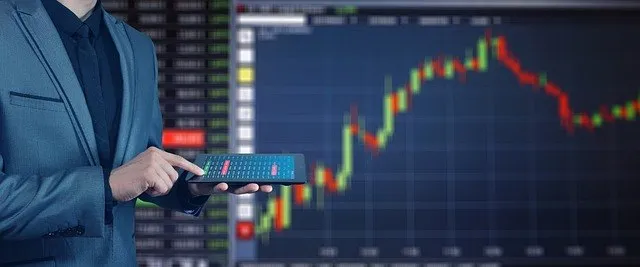
Image Source: Pixabay
Interest spread outward through family networks in a pattern typical of the Philippines, moving through personal relationships and not through any deliberate marketing effort aimed at provincial markets. Someone working in Manila who has taken up trading often mentions it casually during a visit home, and a relative running a small provincial business becomes curious about something previously known mainly through news stories about financial scams. This kind of transmission, built on personal trust and not institutional messaging, has long been how new financial behaviors spread through Filipino communities, whether the subject is insurance, microfinance, or now currency speculation.
Economic pressure has accelerated this spread in ways curiosity alone would not have. Many provincial business owners run on razor thin margins, under pressure from rising costs and unpredictable foot traffic. Trading is one of the few things left to make supplementary income without additional capital or physical labor. This is especially attractive to a shopkeeper who is already putting in long hours at the till and can spend the quiet times looking at price charts, rather than being tied to the rigid hours and lack of flexibility that is typical of a regular nine-to-five job.
Skepticism has traveled alongside enthusiasm, shaped by cautionary stories that spread quickly within tight knit provincial communities. In a small town, nearly everyone knows someone who lost money to an unlicensed platform, and that shared knowledge fosters communal caution in ways that rarely develop in Manila, where trading losses remain private and unlikely to become neighborhood conversation. This social visibility has, somewhat paradoxically, encouraged real caution among provincial traders, since reputational stakes there extend well beyond personal finances.
This migration has also been quietly enabled by improving infrastructure, since forex trading requires a stable internet connection many provincial areas lacked until recently. Expanding mobile data coverage and increasingly affordable smartphones have done as much to spread this trading culture beyond Manila as any growing interest in financial markets itself. What began as an urban, upper middle class activity has broadened into a far more general interest, shaped by local economic realities and community trust. It no longer marks someone as a young professional in Manila, but instead has become a practical addition to daily life for anyone with a phone, some spare time to watch the market move, and a measure of patience.

Comments